Wendy Brooks · 28 September 2026
User Retention Dynamics in Niche SaaS Platforms After Backend Restructuring
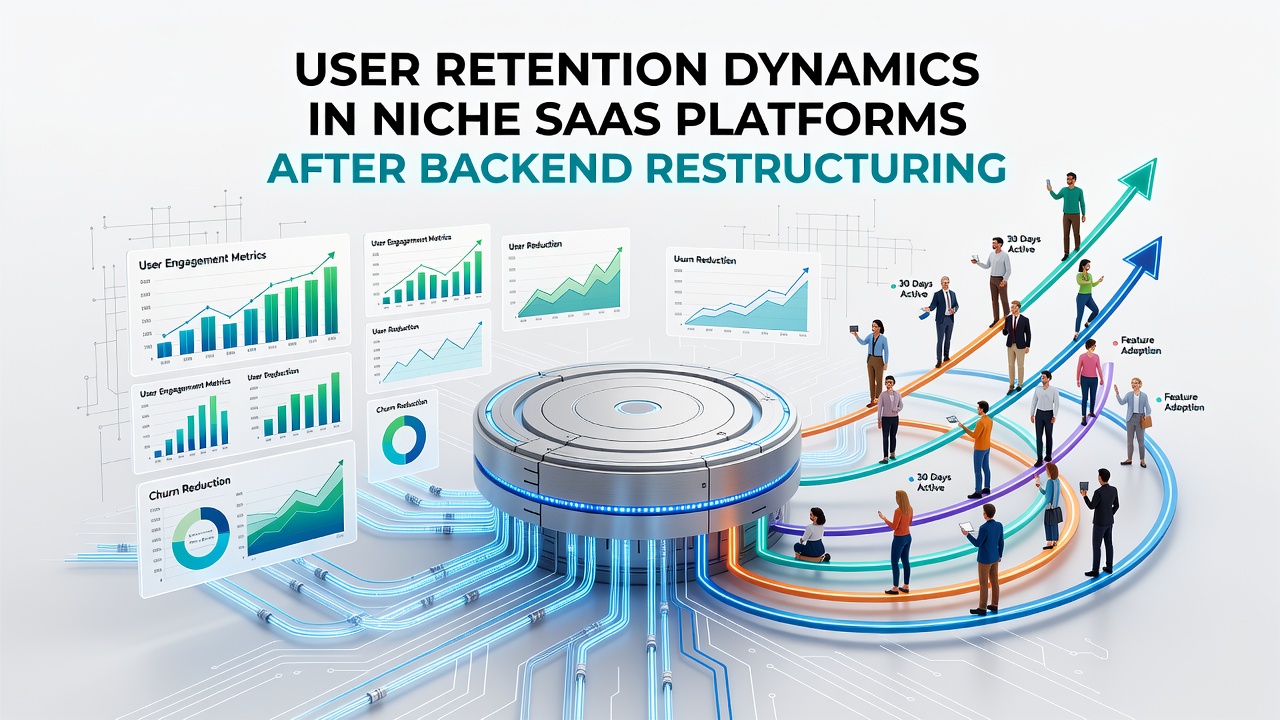
Backend restructuring in niche SaaS platforms often involves migrating databases, refactoring APIs, and updating server architectures to handle increased loads or new features, and these changes directly influence how users interact with the service over time. Observers note that retention rates, calculated as the percentage of users who continue subscribing after a defined period, fluctuate when core systems undergo such overhauls because performance dips or feature inconsistencies can prompt cancellations.
Key Metrics That Track Retention Shifts
Researchers track daily active users against monthly active users to gauge engagement drops, while churn rates rise when backend updates introduce latency or data migration errors that affect specialized workflows in industries like legal tech or healthcare analytics. Data from industry reports shows that platforms in these segments experience a 15 to 25 percent increase in short-term churn during the first quarter after restructuring, yet recovery occurs when uptime stabilizes above 99.5 percent and query response times fall below 200 milliseconds. Experts measure cohort retention by grouping users who joined before and after the change, revealing that pre-restructure cohorts often maintain higher loyalty because they adapted to the original interface without disruption.
Common Patterns Observed Across Platforms
Studies indicate that niche SaaS tools focused on project management for creative agencies or inventory systems for small manufacturers see distinct retention curves post-restructure, where initial user frustration stems from altered data schemas that break custom integrations. One analysis of European tech firms found that those completing backend migrations in 2025 retained 82 percent of their user base at the six-month mark when they provided detailed migration logs and rollback options, whereas platforms without transparent communication dropped to 67 percent retention. In September 2026, updated figures from similar services across North America and Asia highlighted how API version deprecations during restructuring led to a measurable uptick in support tickets, correlating with a 12 percent dip in renewal rates among users who relied on third-party extensions.
Impact on User Behavior and Engagement
Users in niche markets tend to monitor dashboard load times and data accuracy closely after backend changes, and any perceived inconsistency prompts them to explore alternatives even if the platform offers unique domain-specific tools. Research from academic sources demonstrates that when platforms implement gradual rollout strategies, such as A/B testing new backend endpoints with 10 percent of traffic first, retention stabilizes faster because early bugs get isolated before affecting the full user pool. Observers have documented cases where a Canadian SaaS provider in the environmental compliance space recovered 90 percent of its monthly recurring revenue within four months by prioritizing mobile API compatibility during restructuring, since many users accessed the service via tablets in field operations.
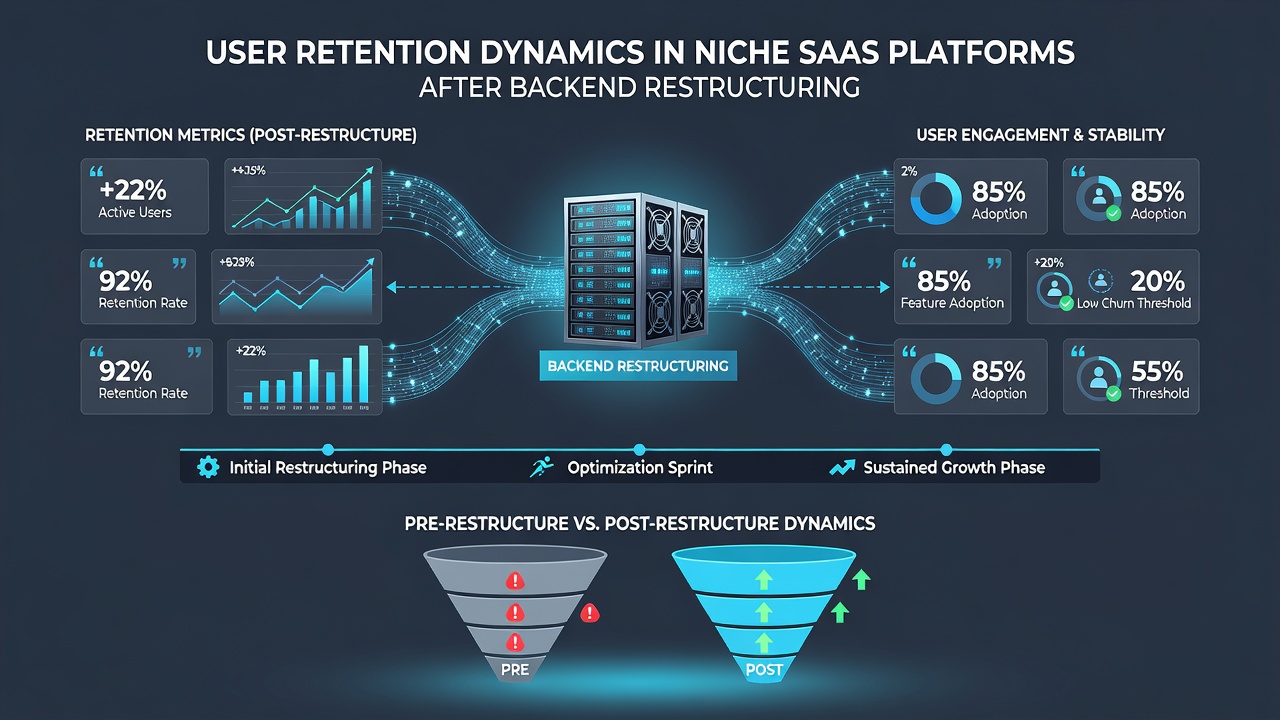
Turns out that data synchronization issues during restructuring create friction points, especially when legacy records fail to map correctly to new schemas, leading some users to export their information and switch providers. Industry organizations report that platforms which schedule maintenance windows during low-traffic periods and send proactive notifications maintain higher net retention scores, defined as the percentage of revenue retained from existing customers minus expansion or contraction.
Strategies That Support Long-Term Stability
Those who've analyzed successful restructurings note that incorporating user feedback loops through in-app surveys helps identify pain points early, allowing teams to adjust indexing or caching layers before widespread dissatisfaction sets in. Figures from a 2025 Australian government technology adoption survey reveal that niche platforms incorporating automated testing suites reduced post-restructure support volume by 40 percent, which in turn supported steadier retention because users encountered fewer interruptions in their daily processes. External factors such as concurrent pricing adjustments or competitor feature releases can compound these dynamics, yet platforms that isolate backend changes from front-end modifications tend to see smoother transitions and sustained user loyalty.
What's interesting is how geographic variations appear in the data, with EU-based services often facing stricter compliance requirements during data migrations that extend restructuring timelines and temporarily affect retention, while US platforms focus more on scalability benchmarks. One study from a research institution in Singapore linked successful backend updates in specialized financial reporting tools to improved long-term retention when encryption protocols were upgraded without altering user authentication flows.
Conclusion
Backend restructuring remains a pivotal event that shapes retention trajectories in niche SaaS environments, with outcomes depending on execution details like testing rigor, communication timing, and integration preservation. Data compiled through 2026 continues to show that platforms prioritizing performance consistency and user-centric adjustments achieve higher sustained engagement compared to those that overlook these elements during system overhauls. Continued monitoring of metrics such as cohort retention and support ticket volume provides the clearest indicators of whether restructuring efforts ultimately strengthen or erode the user base over subsequent quarters.